Friedrich Nietzsche
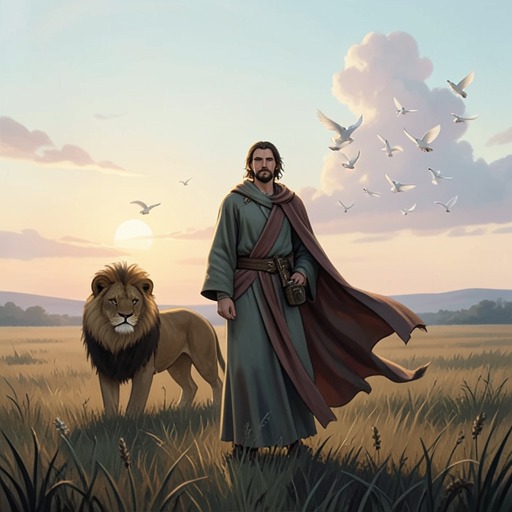
Thus Spoke ZarathustraFriedrich Nietzsche was a German philosopher whose intellectual project joined a radical critique of inherited values to an attempt to make life affirmable without metaphysical guarantees. The account presented here traces that project from his loss of Christian belief and academic formation through recurring illness, the composition of Thus Spoke Zarathustra, and his final collapse. Its central philosophical thread is the will to power: not merely a desire to dominate others, but a principle through which life shapes values, disciplines itself, and seeks an increase in its capacities.
Formation and Academic Career
Nietzsche was born on 15 October 1844 in the parsonage at Röcken, near Lützen, Germany. He was the first of three children of Karl Ludwig, the village pastor, and Fraziska Nietzsche, the daughter of a pastor from a nearby village. His father died in 1849. In April 1850 the family moved to Naumburg, in Thuringia, and Nietzsche later won a place at the prestigious Pforta grammar school. These early details place his upbringing within a Protestant clerical household, the religious inheritance he would later leave behind.
In 1864 Nietzsche entered the University of Bonn to study theology and philology. At Easter 1865 he abandoned theology after losing his Christian belief, left Bonn for Leipzig, and followed his former philology tutor, Friedrich Ritschl. He began reading Arthur Schopenhauer in Leipzig. The next years brought scholarly recognition and changes of direction: in 1867 he published his first work, a study of the Theognidea collection, and began military service; in 1868 he was discharged from the army and met Richard Wagner. In 1869, recommended by Ritschl, he was appointed to the chair of classical philology at the University of Basel and awarded a doctorate by Leipzig. He also became a regular visitor at the Wagners’ home in Tribschen.
Illness, Work, and Relationships
Nietzsche’s academic career was repeatedly interrupted by ill health. In 1870 he gave public lectures on Greek music drama and Socrates and tragedy, then served as a medical orderly with the Prussian Army, where he contracted diphtheria. His health deteriorated in 1871; he took leave to recover and worked on The Birth of Tragedy, published in January 1872. After further publications in the Untimely Meditations series, he met Peter Gast in 1875. Gast would become his earliest disciple. That Christmas Nietzsche suffered a general collapse.
In 1876 he received an extended absence from Basel because of continuing illness. During that year he proposed marriage to Mathilde Trampedach and was rejected, published the fourth Untimely Meditation on Richard Wagner, and travelled to Italy. Human, All Too Human appeared in 1878, the year his friendship with the Wagners ended. He retired from Basel on a pension in 1879 because of sickness. The chronology thus records both an intellectual separation, marked by the end of the Wagner friendship, and the growing bodily constraint under which he continued to write. In 1882 he proposed to Lou Andreas-Salomé and was rejected.
The Philosophical Project
The philosophical account here identifies Nietzsche’s central problem as the nihilistic devaluation of life that followed the destruction of the metaphysical world, expressed as the death of God. It presents his effort to explain distinctively human qualities without recourse to the supernatural through a psychology of primitive drives. The desire for power and the emotion of fear initially emerge as dominant; once fear is understood as the feeling of an absence of power, the account reduces human motivation to a single principle, the will to power.
That principle also explains value-making. Every people lives by evaluations, organized as a table of self-imposed commands; such commands can turn a herd into a nation by directing primitive aggression back upon itself as self-control. Applied to an individual, the same process means imposing commands upon oneself and obeying them. The Superman, in this interpretation, is the person who has mastered himself—not someone who has merely inherited a ready-made code. Self-mastery is the hardest task because it demands the greatest power, and its achievement brings joy as the felt increase of power and the overcoming of resistance.
Nietzsche’s treatment of good and evil follows from this emphasis on creation. In Of the Thousand and One Goals, Zarathustra has seen many lands and peoples and finds no greater power on earth than good and evil: no people can live without evaluating, but a people must not evaluate as its neighbour does if it wishes to maintain itself. In another passage, the people Zarathustra visits assume that they already know what is good and evil; his teaching disturbs that certainty by reserving knowledge of those values for the creator. He also places the greatest danger to humanity in the good and just who claim already to possess justice and condemn those still searching for it. The point is not simply to exchange one settled moral table for another, but to expose the authority claimed by inherited judgments and reopen the task of valuation.
Zarathustra, Final Years, and Legacy
The chronology marks the writing of Thus Spoke Zarathustra across several years: parts I and II appeared in 1883, part III in 1884, and part IV was privately printed in 1885. In the philosophical reading offered here, the work gives rhapsodic expression to eternal recurrence: the thought that all events are chained and entwined together. The Superman would be able to affirm life as a whole, including its pain, and to will that life again and again. Such affirmation is presented as the final overcoming of nihilism, because existence no longer requires an external justification if joy in life is itself its justification.
Nietzsche’s later chronology records the publication of Beyond Good and Evil in 1886 and On the Genealogy of Morals in 1887. After some short-lived improvement in health in 1888, he suffered a mental collapse in Turin in 1889 and was admitted to a psychiatric clinic at the University of Jena. He returned to his mother’s home in 1890; after her death in 1897, his sister, Elisabeth, moved him to Weimar. Nietzsche died on 25 August 1900. The Nietzsche Archive was founded by Elisabeth in 1894, and The Will to Power appeared in 1901 as a selection of papers made by Elisabeth and Peter Gast. That posthumous publication history is distinct from Nietzsche’s own authored books: the chronology identifies the selection as the work of his sister and Gast. His life’s arc therefore ends not with a recorded resolution of his philosophical project, but with a collapse and a subsequent history of preservation and publication.